7 May 2026 · 3 min read
The Smarter Way
On productive laziness as a design philosophy, and why the search for a better path is the real work.
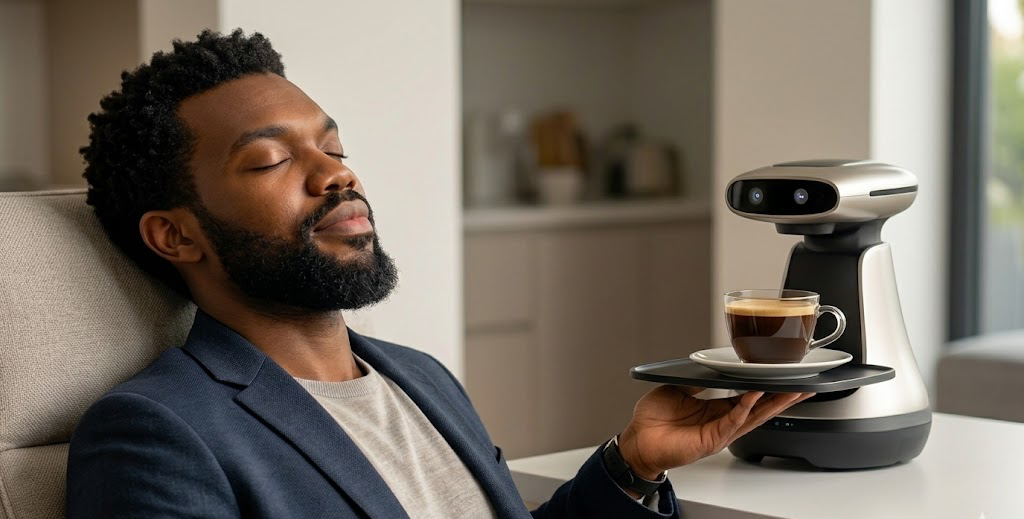
On laziness as a design philosophy, and why the search for a better path is the work itself
There is a kind of laziness people don’t talk about.
Not the one your parents warned you about. Not the one that looks like lying on your bed all day while NEPA takes light and brings it back like a joke. I mean a different kind. The kind that looks at something stressful, repetitive, or draining and quietly asks, why is this still like this?
That question is dangerous.
Because once you start asking it, you can’t unsee things.
You begin to notice how much of life is built on endurance instead of sense. You see people standing in long queues for things that could have been handled in minutes. You see workers rewriting the same reports every week because “that’s how it’s always been done.” You see someone spend hours doing calculations that a simple tool could finish in seconds.
And the strange thing is, nobody questions it.
They just adjust. They accept it. They tell themselves this is what hard work looks like.
But sometimes, it isn’t.
Sometimes, it is just inefficiency wearing the mask of discipline.
I remember watching a small business owner once, somewhere in Lagos, sitting behind a counter with a pen and a big ledger book. Every sale was written down carefully. Every total calculated by hand. Customers waited while he double checked figures, flipping pages back and forth.
He wasn’t lazy. Far from it. He was working hard. Focused. Serious.
But you could feel the weight of it. The slowness. The friction.
Someone suggested he try a simple digital system. At first, he resisted. It felt unnecessary. Maybe even risky. What if it failed? What if he lost control?
But eventually, he tried it.
And everything changed.
The same work that used to take hours now took minutes. The stress dropped. The errors reduced. He didn’t become less serious about his business. He just stopped doing it the hard way.
That shift didn’t come from working harder.
It came from asking a better question.
Why am I doing it like this?
That question is where the smarter way begins.
Most people are trained to push through discomfort. If something is slow, you endure it. If it is stressful, you manage it. There is pride in being able to handle pressure, especially in places where survival itself already demands so much.
So the instinct becomes clear. Keep going. Don’t stop. Don’t question too much.
But the truth is, not everything deserves endurance.
Some things deserve redesign.
There is a quiet kind of rebellion in refusing to waste your energy. In refusing to repeat something that makes no sense. It does not look loud or impressive. In fact, from the outside, it can look like avoidance.
Someone sees you pause and thinks you are slowing down.
But what you are really doing is refusing to move blindly.
The search for a better way can feel uncomfortable at first. Especially when everyone around you is moving fast, even if they are moving in circles. You start to feel like you are doing less. Like you are not “serious” enough.
But that is only because most people measure effort by how tired you look, not by what you achieve.
There is a difference between motion and progress.
You can spend an entire day busy and still move nowhere.
You can spend an hour thinking clearly and change everything.
Around the world, the biggest shifts have never come from people who simply accepted things as they were. Someone looked at long distances and imagined faster travel. Someone looked at manual work and imagined automation. Someone looked at scattered information and imagined the internet.
None of those ideas came from endurance.
They came from discomfort. From someone being just unwilling enough to accept the current way.
That same instinct, on a smaller scale, is available to anyone.
You don’t need to build something global. Sometimes it is as simple as removing one unnecessary step from your daily routine. Or finding a way to automate a task that keeps draining you. Or questioning a process at work that nobody has touched in years.
Those small changes compound.
One less hour wasted today becomes ten hours saved next week.
Ten hours saved becomes space.
And space is where better thinking happens.
That is the real advantage.
Not just saving time, but creating room to think differently.
Because once you get used to looking for better paths, you stop accepting things at face value. You begin to notice patterns faster. You start asking sharper questions. You develop a kind of sensitivity to wasted effort.
Over time, it becomes instinct.
You walk into a situation and almost immediately see what can be simplified, removed, or improved. Not perfectly. Not always correctly. But consistently enough that your entire way of working changes.
And at that point, something shifts.
You are no longer just someone who works hard.
You are someone who shapes how the work is done.
That is where the real power is.
Not in how much you can carry, but in how much you can take off your shoulders entirely.
Because hard work will solve today’s problem.
But a smarter way will keep solving it, quietly, long after you have moved on.
And that is why the search matters so much.
Even when it feels slow.
Even when it feels uncertain.
Even when it looks like you are doing less.
You are not avoiding the work.
You are refining it.